PMOS vs PCOS: Understanding the New Name for PCOS
If you have searched for PCOS, you may now be seeing a new term: Polyendocrine Metabolic Ovarian Syndrome (PMOS).
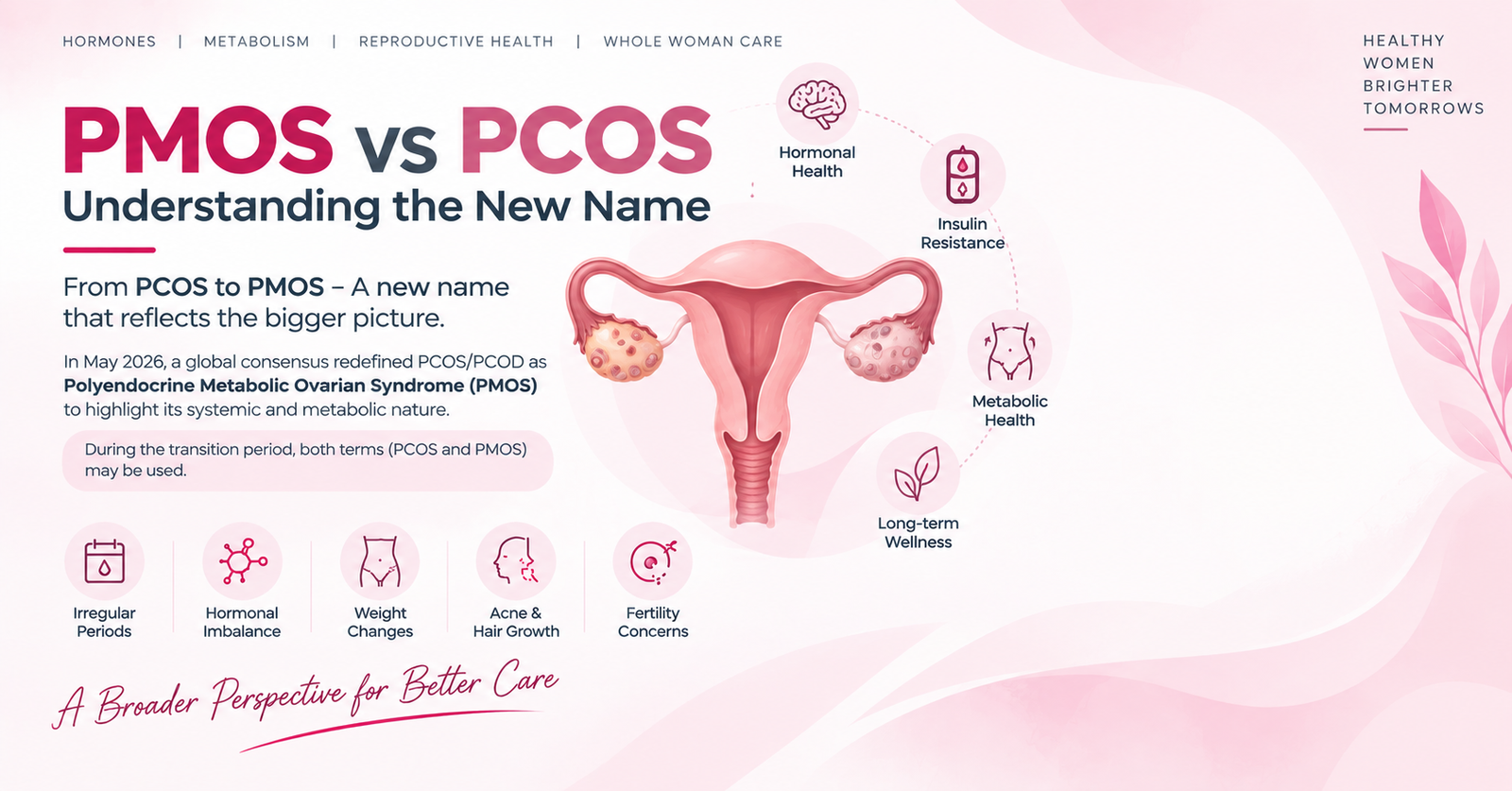
In May 2026, an international consensus process introduced PMOS as the new name for the condition previously known as Polycystic Ovary Syndrome (PCOS). The change is intended to better reflect that the condition involves hormonal, metabolic, reproductive and other aspects of health—not simply the ovaries.
During the transition period, you may see both PMOS and PCOS used in medical information and online searches. The underlying condition has not suddenly changed; the terminology has been updated.
What Is PMOS?
Polyendocrine Metabolic Ovarian Syndrome (PMOS) is the updated name for what was previously called PCOS.
The new terminology highlights three important areas:
- Polyendocrine: Multiple hormonal systems can be involved.
- Metabolic: Metabolic health and the body's response to insulin can be important parts of the condition.
- Ovarian: Ovulation and ovarian function can be affected.
PMOS can be associated with irregular menstrual cycles, increased androgen activity, acne, excess facial or body hair, hair thinning, difficulties with ovulation and fertility, and metabolic concerns. Symptoms can vary significantly between individuals.
PMOS vs PCOS: What Is the Difference?
The simplest answer is:
PMOS and PCOS refer to the same underlying condition.
PCOS was the traditional name: Polycystic Ovary Syndrome.
PMOS is the updated terminology: Polyendocrine Metabolic Ovarian Syndrome.
The name change does not mean that women who previously had PCOS now have a different disease. Instead, the new terminology aims to communicate the broader hormonal and metabolic nature of the condition.
Why Was PCOS Renamed?
The term "polycystic" created confusion because ovarian cysts are not required for the condition. What may be seen on an ultrasound are follicles, which are different from pathological ovarian cysts.
The international renaming process involved patient and professional organisations from around the world and was developed through extensive consultation.
What Are the Symptoms of PMOS?
PMOS symptoms can differ from woman to woman.
Common symptoms can include:
1. Irregular Periods
Periods may become irregular, infrequent or separated by long gaps. Some women may also experience prolonged or unpredictable bleeding.
2. Acne and Oily Skin
Changes in androgen activity can contribute to acne and oily skin in some women.
3. Excess Facial or Body Hair
Increased androgen activity can contribute to unwanted facial or body hair, known medically as hirsutism.
4. Hair Thinning
Some women may experience thinning hair or hair loss from the scalp.
5. Weight and Metabolic Changes
Some women with PMOS experience weight changes or metabolic concerns. However, PMOS can occur across different body sizes, so body weight alone cannot determine whether someone has the condition.
6. Fertility Difficulties
Irregular ovulation can make conception more difficult for some women.
What Are PMOS Insulin Resistance Signs?
One important reason for the name change is the recognition of the metabolic component of the condition.
Insulin is a hormone that helps the body regulate blood glucose. Changes in the way the body responds to insulin can occur in people with PMOS and may be associated with metabolic health concerns.
Possible signs or situations that may prompt a doctor to evaluate metabolic health include:
- Unexplained or persistent weight changes
- Increased waist circumference
- Difficulty managing blood glucose
- Abnormal blood sugar test results
- A history of prediabetes or diabetes
- Other metabolic risk factors
Importantly, insulin resistance cannot be diagnosed based on symptoms alone. A healthcare professional may recommend appropriate blood tests and metabolic assessment based on your individual history.
Can PMOS Affect Fertility?
Yes. PMOS can affect ovulation, and irregular ovulation may make it harder for some women to become pregnant.
However, a diagnosis of PMOS does not mean that pregnancy is impossible.
Women with PMOS who are planning pregnancy can discuss menstrual cycles, ovulation, lifestyle factors and fertility options with a gynaecologist.
Does PMOS Mean You Have Ovarian Cysts?
No.
The name PCOS often led people to believe that ovarian cysts were always present. They are not required for the diagnosis.
Small follicles may sometimes be visible on an ultrasound examination, but these are not the same as ovarian cysts.
How Is PMOS Diagnosed?
Diagnosis requires a medical assessment rather than simply checking for one symptom.
A doctor may consider:
- Menstrual history
- Symptoms of increased androgen activity
- Medical and family history
- Physical examination
- Blood tests
- Metabolic assessment
- Ultrasound when clinically appropriate
Other conditions that can cause similar symptoms may also need to be excluded.
The updated international guideline continues to provide evidence-based recommendations for assessment and management under the new PMOS terminology.
Can PMOS Be Treated?
Yes. Although there is currently no single cure for PMOS, symptoms and associated health risks can be managed.
Management may be based on the woman's:
- Symptoms
- Menstrual health
- Metabolic health
- Fertility plans
- Age
- Overall health
- Personal treatment goals
Depending on the individual situation, management may involve lifestyle measures, medical treatment, menstrual-cycle management, metabolic health support or fertility care.
Why the PMOS Name Change Matters
The change from PCOS to PMOS is more than simply changing a few words.
The new terminology aims to encourage a broader understanding of the condition and highlight that women's health concerns can involve hormonal, metabolic, reproductive and overall health.
For women, this can help shift the conversation from simply asking:
"Do I have ovarian cysts?"
to asking:
"How is my hormonal and metabolic health affecting my overall wellbeing?"
When Should You See a Gynaecologist?
Consider speaking with a gynaecologist if you experience:
- Persistent irregular periods
- Long gaps between periods
- Unwanted facial or body hair
- Persistent acne
- Hair thinning
- Unexplained changes in weight
- Difficulty becoming pregnant
- Concerns about hormonal or metabolic health
Getting the right evaluation can help identify the underlying cause of your symptoms and guide appropriate care.
PMOS Care in Madhapur, Hyderabad
If you are looking for PMOS/PCOS care in Madhapur, Hyderabad, a gynaecologist can help evaluate menstrual, hormonal, reproductive and related health concerns.
Dr. Deepthi Dandamudi is a gynaecologist and obstetrician associated with Sravani Hospitals, Madhapur, Hyderabad. A consultation can help women discuss symptoms such as irregular periods, PCOS/PMOS concerns, fertility-related issues and other gynaecological health needs.
Caring for Women. Nurturing Health.