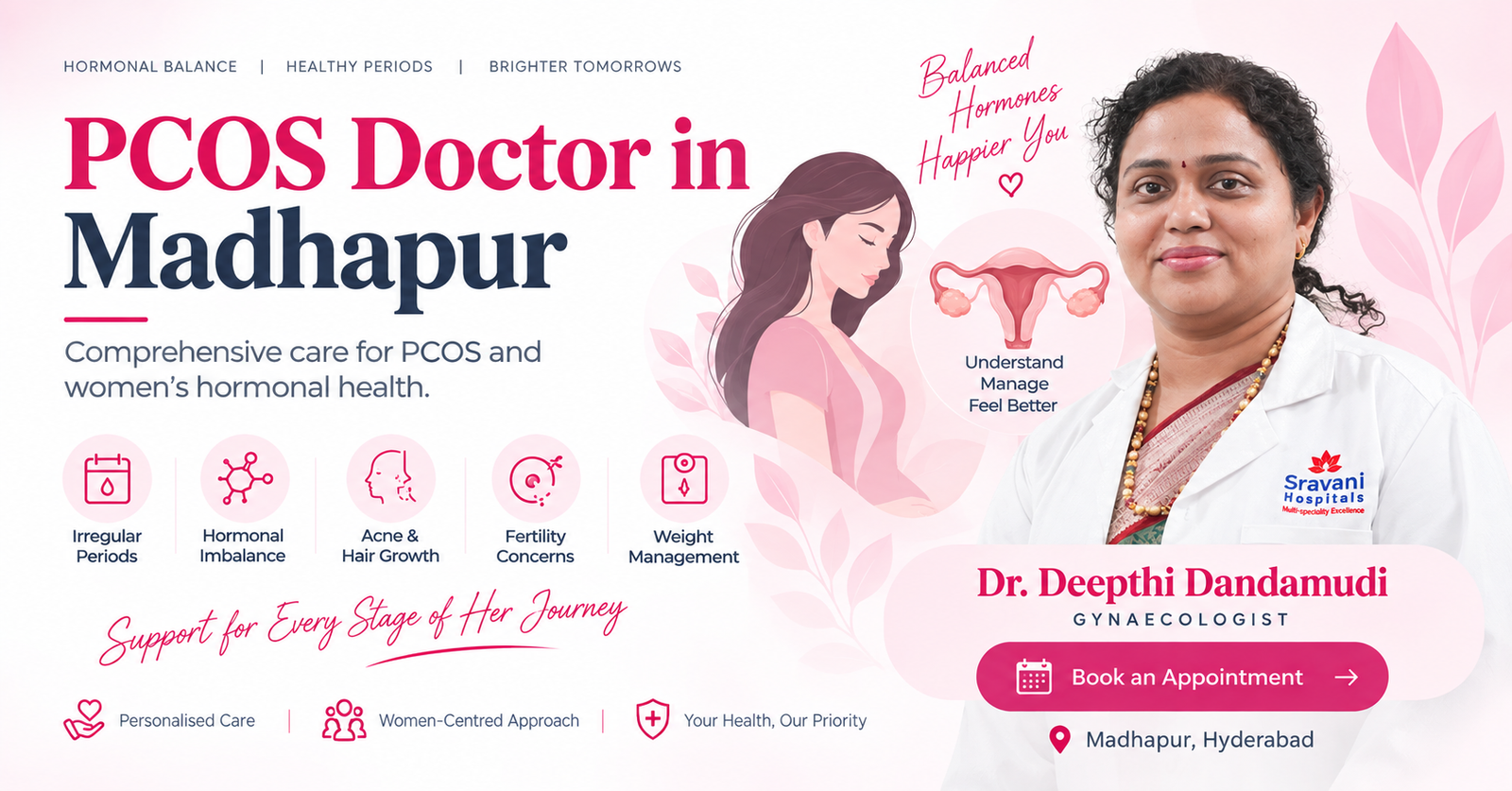
PCOS Doctor in Madhapur
Polycystic Ovary Syndrome (PCOS) is a common hormonal condition that can affect menstrual cycles, ovulation, skin, hair growth, metabolism and fertility. Symptoms can vary considerably from one woman to another, and having one or more symptoms does not necessarily mean that you have PCOS. Proper medical evaluation is important for an accurate diagnosis.
If you are experiencing irregular periods, acne, unwanted facial hair, unexplained changes in weight or difficulty getting pregnant, consulting a gynaecologist can help identify the possible cause and determine the appropriate next steps.
For women looking for a PCOS doctor in Madhapur, Hyderabad, Sravani Hospitals provides gynaecological care including evaluation of PCOS-related symptoms and menstrual concerns. Dr. Deepthi Dandamudi is listed by Sravani Hospitals as a consultant obstetrician and gynaecologist, with additional roles in laparoscopic surgery, fertility and cosmetic gynaecology.
What Is PCOS?
PCOS is a hormonal condition that can affect the way the ovaries function. It may be associated with irregular or infrequent periods, difficulty with ovulation, excess androgen-related symptoms such as unwanted hair growth or acne, and difficulties with fertility.
PCOS can affect women differently. Some women primarily experience menstrual irregularities, while others may seek medical advice because of acne, hair growth, weight changes or fertility concerns.
Common Symptoms of PCOS
Some commonly reported symptoms include:
- Irregular or infrequent periods
- Long gaps between periods
- Acne or oily skin
- Excess facial or body hair
- Hair thinning or hair loss
- Weight gain or difficulty losing weight
- Difficulty becoming pregnant
- Signs associated with insulin resistance
These symptoms can also occur with other health conditions, so they should not be used on their own to diagnose PCOS.
Does PCOS Cause Irregular Periods?
Yes, PCOS can be associated with irregular or infrequent periods because ovulation may not occur regularly.
However, irregular periods can have several causes, including pregnancy, thyroid problems, stress, significant weight changes and other hormonal conditions. This is why persistent menstrual irregularities should be evaluated by a healthcare professional rather than automatically being attributed to PCOS.
How Is PCOS Diagnosed?
There is no single test that confirms PCOS in every woman.
A doctor may consider:
- Your menstrual history
- Symptoms such as acne or excess hair growth
- Medical and reproductive history
- Blood tests
- Hormonal evaluation
- Metabolic health assessment
- Ultrasound when clinically appropriate
Other conditions that can cause similar symptoms may also need to be ruled out.
Your gynaecologist can decide which examinations or investigations are appropriate based on your symptoms and individual health history.
PCOS and Fertility
PCOS can affect ovulation, which may make conception more difficult for some women. However, having PCOS does not automatically mean that a woman cannot become pregnant.
If you have PCOS and are planning a pregnancy, a gynaecologist can assess your menstrual cycle, ovulation and other relevant factors and discuss appropriate fertility planning.
How Is PCOS Treated?
PCOS management depends on the woman's symptoms, age, reproductive goals and overall health.
Treatment may focus on:
Managing Irregular Periods
Medical treatment may be recommended to help manage irregular menstrual cycles when appropriate.
Managing Acne and Excess Hair Growth
Depending on the symptoms and individual circumstances, treatment may be considered for acne or unwanted hair growth.
Supporting Metabolic Health
Healthy eating, regular physical activity and maintaining a healthy weight where appropriate can form part of PCOS management. Treatment plans should be personalised rather than based on a one-size-fits-all diet or exercise programme.
Supporting Fertility
For women trying to conceive, treatment may focus on improving ovulation and addressing other factors that may affect fertility.
Because PCOS management varies between patients, medicines should only be taken under appropriate medical supervision.
When Should You See a PCOS Doctor?
Consider consulting a gynaecologist if you have:
- Periods that are consistently irregular
- Long gaps between periods
- Persistent acne or excessive facial hair
- Difficulty becoming pregnant
- Unexplained menstrual changes
- Repeated symptoms that are affecting your daily life
- Concerns about PCOS or hormonal health
Early evaluation can help identify the underlying cause and provide an appropriate management plan.
PCOS Care in Madhapur, Hyderabad
If you are searching for a PCOS doctor in Madhapur, choosing a gynaecologist who can evaluate your symptoms and discuss your individual health and fertility goals can be an important first step.
Sravani Hospitals' Obstetrics & Gynaecology department in Madhapur lists care for PCOS/PCOD-related symptoms, irregular periods, menstrual concerns, fertility-related evaluation and other women's health concerns.
Dr. Deepthi Dandamudi is listed on the Sravani Hospitals website as a consultant obstetrician and gynaecologist, laparoscopic surgeon, fertility specialist and cosmetic gynaecologist.
If you are experiencing symptoms that may be related to PCOS, a consultation can help you understand what may be causing them and what evaluation or treatment may be appropriate.
Book a Consultation
Looking for a PCOS doctor in Madhapur, Hyderabad?
Schedule a consultation for personalised evaluation and guidance regarding PCOS, irregular periods, hormonal concerns and reproductive health.