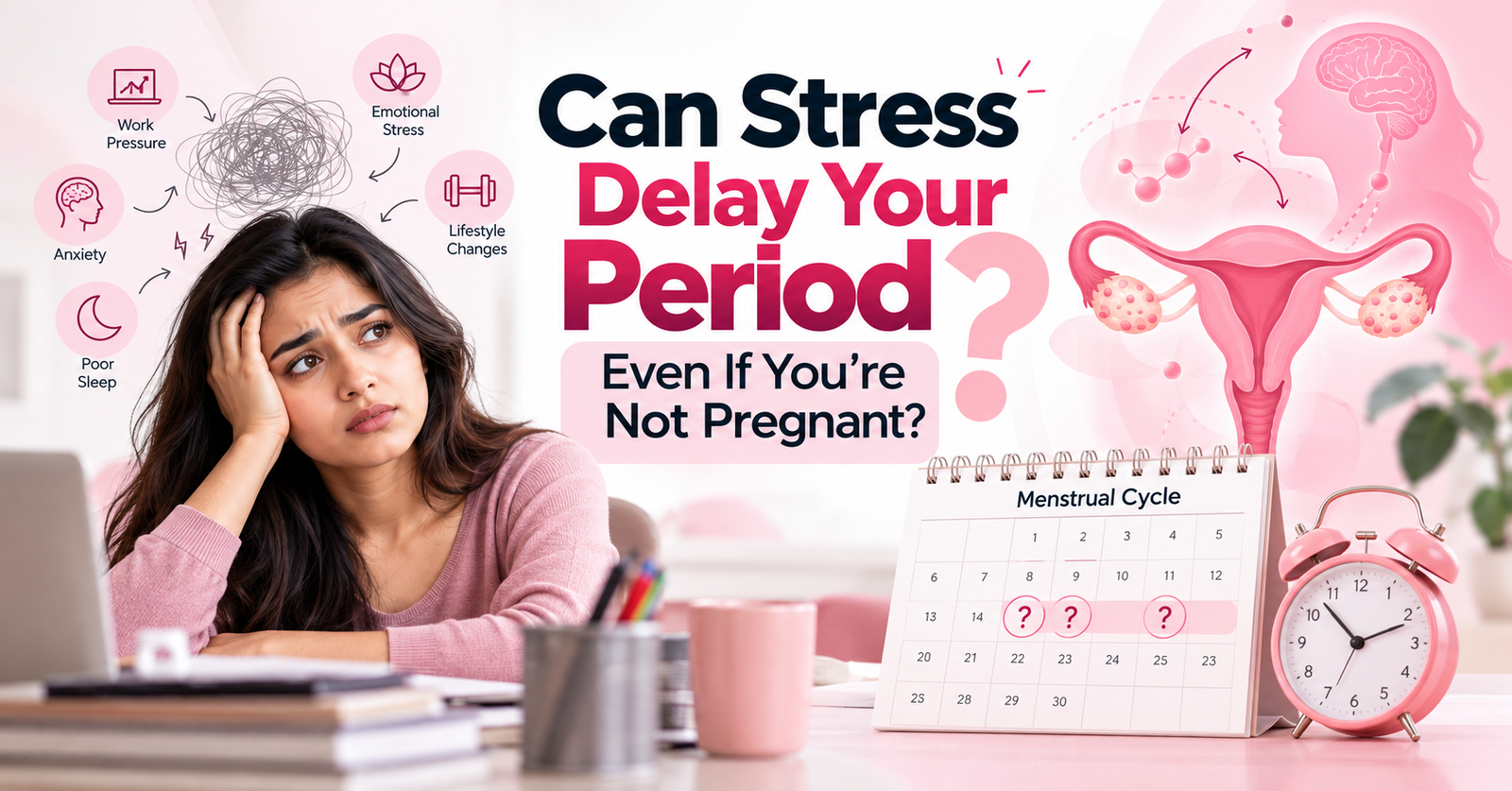
Can Stress Delay Your Period Even If You’re Not Pregnant?
Have you ever experienced a late period during a stressful month? Perhaps you were dealing with work pressure, examinations, poor sleep, emotional difficulties or major changes in your daily routine.
You are not alone. Stress can affect your menstrual cycle and may delay ovulation, making your period arrive later than expected. In some cases, prolonged or significant stress may contribute to missed periods. However, stress is only one possible explanation, and a delayed period should not automatically be attributed to it.
Understanding the connection between stress, hormones and menstrual health can help you recognise when lifestyle changes may help and when medical evaluation is necessary.
How Does Stress Affect Your Menstrual Cycle?
Your menstrual cycle is regulated by a coordinated system involving the brain, pituitary gland and ovaries. These organs communicate through hormones that help control ovulation and menstruation.
When you experience significant or prolonged stress, the body's stress-response system can interfere with the hormonal signals that regulate ovulation.
If ovulation occurs later than usual, your next period may also be delayed. If hormonal signalling is significantly disrupted, menstruation may temporarily stop.
The effect varies from person to person. Everyday stress does not necessarily cause a missed period, but substantial or ongoing stress can affect some women's cycles.
What Types of Stress Can Delay Your Period?
Different experiences can place stress on the body and potentially affect menstrual regularity.
1. Work Pressure and Academic Stress
Long working hours, demanding deadlines, examinations and ongoing performance pressure may affect sleep, eating habits and stress levels. In some women, these changes may contribute to irregular periods.
2. Emotional Stress
Relationship difficulties, grief, family problems, anxiety and other emotionally challenging experiences can affect the body's stress response and menstrual cycle.
3. Poor Sleep
Irregular sleep schedules and insufficient sleep can affect overall wellbeing and may contribute to changes in the hormonal processes associated with menstruation.
4. Sudden Weight Changes
Significant weight loss, inadequate food intake or excessive exercise can affect reproductive hormone signalling. These factors may occur alongside stress and contribute to missed periods.
5. Long-Term Stress
When stress continues for weeks or months, menstrual changes may persist. Repeatedly missed periods deserve medical attention rather than being assumed to result from stress alone.
How Many Days Can Stress Delay Your Period?
There is no fixed number of days that stress will delay a period. The effect depends on the severity of stress, individual hormonal responses and whether ovulation is affected.
Some women may notice a small change in their usual cycle, while others may experience a more substantial delay or miss a period.
For many adults, menstrual cycles commonly occur every 21–35 days, although individual patterns vary. Tracking your cycle over several months can help you identify changes.
If your period is late and pregnancy is possible, take a pregnancy test rather than relying on stress as the explanation. If the test is negative but your period still does not arrive, follow the test instructions about repeat testing and consult a healthcare professional if the delay continues.
What Are the Signs That Stress May Be Affecting Your Period?
Stress can affect people differently. You may notice one or more of the following:
Your period arrives later than expected.
Your cycle becomes less predictable.
You miss a period.
Your sleep pattern changes.
You experience increased anxiety or emotional exhaustion.
Your appetite or weight changes.
You feel unusually tired.
These symptoms do not confirm that stress is the cause. Similar menstrual changes can occur with pregnancy, thyroid disorders, PMOS (formerly known as PCOS), changes in weight, certain medications and other health conditions.
If You Are Not Pregnant, What Else Can Cause a Missed Period?
Stress is not the only possible cause. Other explanations include:
Pregnancy
Pregnancy is an important possibility to rule out if you have had sex that could result in pregnancy, even if you have been under considerable stress.
PMOS (Formerly Known as PCOS)
Polyendocrine Metabolic Ovarian Syndrome, or PMOS, can affect ovulation and cause irregular or missed periods. Other symptoms may include acne, excess facial or body hair, or changes in weight.
Thyroid Disorders
An underactive or overactive thyroid can affect the hormonal processes involved in menstruation.
Significant Weight Loss or Excessive Exercise
Insufficient calorie intake, substantial weight changes and intensive exercise can disrupt reproductive hormone signalling.
Breastfeeding and Hormonal Contraception
Breastfeeding and certain contraceptive methods can change menstrual patterns or temporarily stop periods.
Perimenopause
As menopause approaches, hormonal fluctuations can make periods less predictable.
The appropriate evaluation depends on your age, medical history, symptoms and menstrual pattern.
How Can You Support Menstrual Health During Stressful Periods?
Healthy routines may help support your overall wellbeing and menstrual health. They are not a substitute for medical evaluation when periods remain absent or irregular.
Prioritise sleep: Maintain a regular sleep schedule and aim for sufficient rest.
Eat balanced meals: Avoid crash diets and make sure you eat enough to meet your body's nutritional needs.
Exercise appropriately: Choose regular, manageable physical activity instead of excessive exercise.
Try relaxation techniques: Slow breathing, meditation, gentle yoga or activities you enjoy may help you manage stress.
Track your menstrual cycle: Record the first day of each period, cycle length, symptoms, medications and major changes in sleep, diet or stress.
Seek support when needed: If stress or anxiety is affecting daily life, consider speaking with a qualified mental health professional.
Do not take hormonal tablets or medicines to induce a period without appropriate medical advice.
When Should You Consult a Gynaecologist?
A delayed period does not always indicate a serious problem, but certain situations should not be ignored.
Consider consulting a gynaecologist if:
You have missed three periods in a row.
Your periods have become persistently irregular.
You have unexplained weight changes, unusual facial hair growth, persistent fatigue or other new symptoms.
You are trying to conceive and have irregular or absent periods.
Your menstrual pattern changes significantly or you are concerned about the delay.
Seek urgent medical care if a missed period or possible pregnancy is accompanied by severe abdominal or pelvic pain, fainting, marked dizziness or heavy bleeding. These symptoms may require prompt assessment, including to rule out an ectopic pregnancy.
Frequently Asked Questions
1. Can stress delay your period even if you are not pregnant?
Yes. Significant or prolonged stress can interfere with the hormonal signals that regulate ovulation. When ovulation is delayed, your period may arrive later than expected. Other causes should also be considered.
2. Can anxiety cause you to miss an entire period?
It can contribute to a missed period in some people, particularly when stress is substantial or prolonged. However, a missed period should not automatically be attributed to anxiety.
3. How do I know whether my late period is caused by stress or pregnancy?
Symptoms alone cannot reliably distinguish the two. If pregnancy is possible, take a pregnancy test according to its instructions. Seek medical advice if your period remains absent or you continue to suspect pregnancy despite a negative result.
4. Can stress cause irregular periods every month?
Ongoing stress may contribute to repeated menstrual irregularities. However, persistent changes can also result from thyroid disorders, PMOS and other conditions. A medical evaluation can help identify the cause.
5. Will my period return when my stress reduces?
If stress is contributing to the delay, managing it may help your cycle return to its usual pattern. Recovery varies, and persistent missed periods need assessment to rule out other causes.
6. When should I worry about a missed period?
Seek medical advice if you miss three periods in a row, experience persistent irregularity or develop other concerning symptoms. Seek urgent care for severe pelvic pain, fainting or heavy bleeding, particularly when pregnancy is possible.
7. Can stress affect fertility?
Significant stress may affect the hormonal processes involved in ovulation in some women. However, fertility is influenced by many factors, and stress alone should not be assumed to explain difficulty conceiving.
Conclusion
Stress can affect your menstrual cycle, but it is not the only reason for a delayed or missed period. Understanding your cycle, maintaining healthy routines and seeking medical advice when changes persist can help you protect your reproductive health.
If your period is repeatedly delayed, has stopped unexpectedly or is accompanied by other symptoms, a personalised medical assessment can help identify the underlying cause and guide appropriate care.
Need guidance about irregular or delayed periods?
Dr. Deepthi Dandamudi, Gynaecologist and Obstetrician in Madhapur, Hyderabad, can assess menstrual concerns and advise on appropriate investigations and care based on your individual symptoms and medical history.
Medical disclaimer: This article is for general educational purposes and does not replace a consultation with a qualified healthcare professional. Diagnosis and treatment should be based on individual clinical assessment