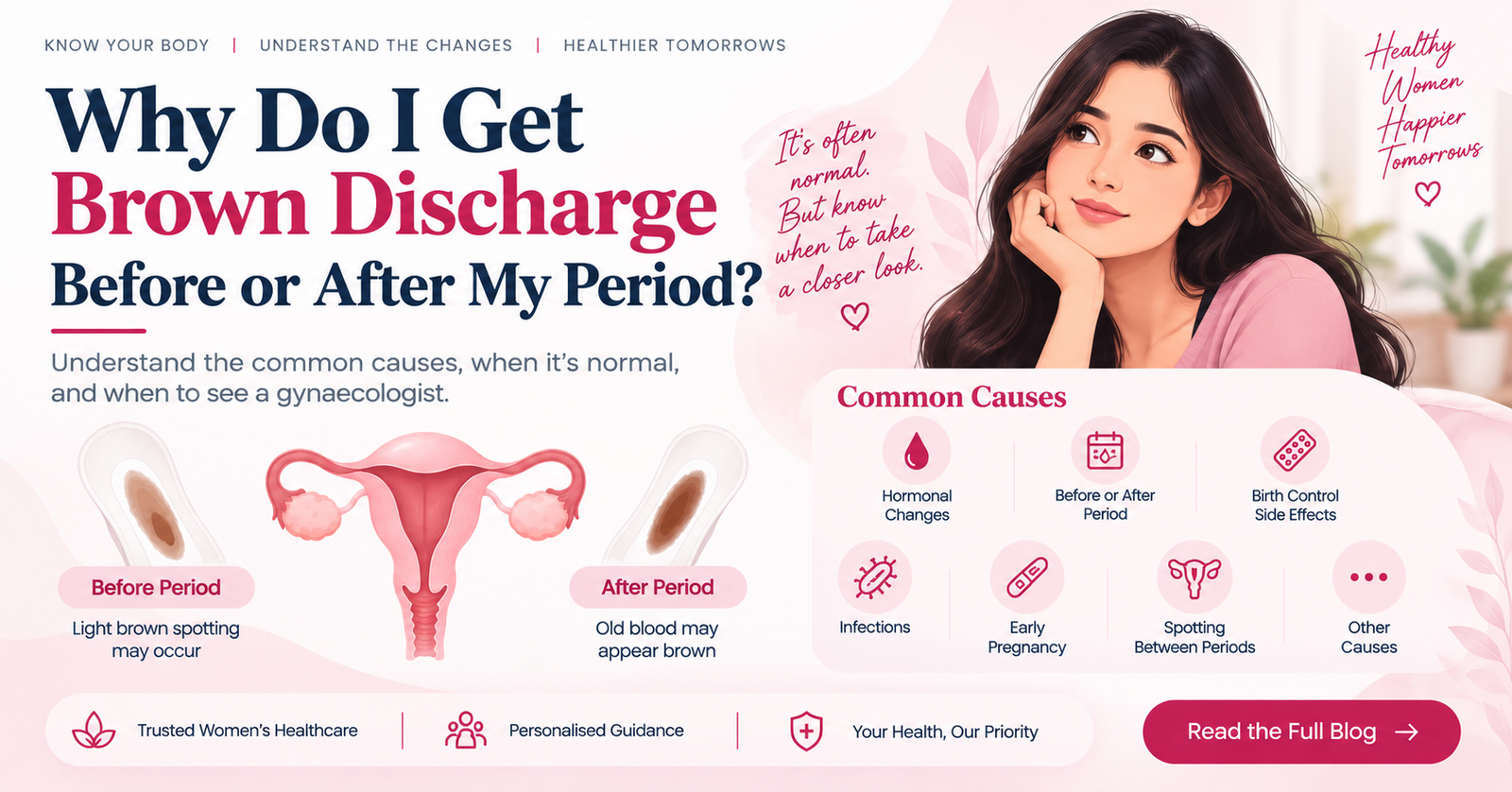
Why Do I Get Brown Discharge Before or After My Period?
Noticing brown discharge before or after your period can be confusing, especially if it doesn't usually happen to you.
The good news is that brown discharge is often related to old menstrual blood. When a small amount of blood takes longer to leave the uterus or vagina, it can become darker as it is exposed to oxygen. When this blood mixes with normal vaginal discharge, it may appear brown or dark brown.
However, brown discharge can sometimes be related to hormonal changes, infections, contraception, pregnancy or bleeding between periods. Understanding when it is likely to be normal—and when it deserves medical attention—is important.
What Does Brown Discharge Mean?
Brown discharge usually means that blood has mixed with vaginal fluid.
Fresh menstrual blood is generally red. Blood that remains in the reproductive tract for longer can become darker because of oxidation, which is why you may see brown or dark-brown discharge toward the end of a period.
A small amount of brown discharge around your period may therefore simply be part of your normal menstrual cycle.
Brown Discharge Before Your Period
Some women notice brown discharge one or two days before their period begins.
This can happen when a small amount of blood is released before the main menstrual flow starts. Hormonal changes around the menstrual cycle can also contribute to spotting.
If this happens occasionally and there are no other symptoms, it may not indicate a serious problem.
However, if you regularly experience spotting between periods or your bleeding pattern has changed significantly, it is worth discussing with a healthcare professional.
Brown Discharge After Your Period
Brown discharge after your period is commonly associated with the last remaining menstrual blood leaving the body.
You may notice:
- Light brown discharge
- Dark brown discharge
- Brown spots on underwear
- Brown discharge mixed with normal vaginal fluid
This may occur toward the end of your period or for a short time afterward.
The color itself is generally less important than how often it happens and whether you have other symptoms.
Is Brown Discharge Normal?
It can be.
Brown discharge is more likely to be related to your menstrual cycle when:
- It occurs around your period
- It is light
- It lasts for a short time
- There is no strong or unpleasant odor
- You do not have significant pelvic pain
- You do not have itching or burning
Normal vaginal discharge can vary throughout the menstrual cycle.
But if the discharge is unusual for you or comes with other symptoms, it should be evaluated.
Other Possible Causes of Brown Discharge
Brown discharge isn't always simply leftover period blood.
1. Hormonal Changes
Changes in hormone levels can cause light spotting or unexpected bleeding.
This can occur naturally during changes in the menstrual cycle or with hormonal contraception.
2. Birth Control
Starting, stopping or changing hormonal contraception can sometimes cause breakthrough bleeding or spotting.
3. Vaginal or Cervical Infections
Certain infections can cause changes in discharge and may sometimes result in blood mixing with vaginal fluid.
For example, bacterial vaginosis can cause discharge with a fishy odor, while some sexually transmitted infections can cause abnormal discharge, bleeding or pelvic symptoms.
4. Spotting Between Periods
Brown discharge may actually be light spotting.
Occasional spotting may not be serious, but repeated or unexplained bleeding between periods should be evaluated.
5. Pregnancy
Brown or blood-tinged discharge can occur during pregnancy, but bleeding during pregnancy should not automatically be assumed to be normal.
If you are pregnant and experience bleeding, particularly with pain, you should seek medical advice promptly.
Brown Discharge With Odor: Should You Worry?
Pay attention if brown discharge has a strong, fishy or unpleasant smell.
A change in the smell, color or consistency of vaginal discharge can sometimes indicate an infection. Other symptoms may include:
- Itching
- Burning
- Vaginal irritation
- Pain while urinating
- Pelvic pain
- Unusual discharge
- Pain during sex
These symptoms should be assessed by a healthcare professional rather than treated through self-diagnosis.
Brown Discharge With Pain
Brown discharge accompanied by pelvic or abdominal pain deserves more attention.
In particular, if you have missed a period and then develop unusual bleeding together with lower abdominal or pelvic pain, seek medical care promptly because pregnancy-related complications, including ectopic pregnancy, need to be ruled out.
Severe pain, heavy bleeding, dizziness, weakness or fever alongside abnormal bleeding also warrants medical assessment.
When Should You See a Gynaecologist?
Consider consulting a gynaecologist if:
- Brown discharge keeps happening between periods
- The amount of bleeding is increasing
- You experience bleeding after sex
- Your periods have suddenly become irregular
- The discharge has a strong or unpleasant smell
- You have itching or burning
- You have pelvic pain
- You have pain while urinating
- You have missed a period and have unusual bleeding
- You are pregnant and experiencing bleeding
Unusual bleeding between periods or after sex should be evaluated to determine its cause.
What Can You Do If You Notice Brown Discharge?
Instead of immediately worrying about the color, keep track of your menstrual cycle.
Note:
- When the discharge appears
- How many days it lasts
- Whether it occurs before or after your period
- Its amount
- Any unusual smell
- Other symptoms such as pain, itching or burning
- Any changes in contraception
Understanding your usual menstrual pattern can make it easier to identify changes that may need medical attention.
Should You Use Intimate Wash for Brown Discharge?
You generally do not need special products to clean the inside of the vagina.
The vagina naturally maintains its own environment. Using perfumed products, vaginal deodorants or douching can cause irritation and may disrupt the natural balance of microorganisms.
Gentle external washing is generally sufficient.
Brown Discharge: The Bottom Line
Brown discharge before or after your period is often caused by old blood and may be a normal part of your menstrual cycle.
But brown discharge that is persistent, unusual for you, associated with an unpleasant smell, pain, itching, heavy bleeding or bleeding between periods should not be ignored.
If you're unsure about a change in your menstrual or vaginal health, a consultation with a gynaecologist can help identify the cause and determine whether any tests or treatment are needed.
Brown Discharge Care in Madhapur, Hyderabad
Women experiencing persistent brown discharge, irregular periods, spotting or other menstrual concerns can consult a gynaecologist for appropriate evaluation.
Dr. Deepthi Dandamudi provides gynaecological and women's healthcare services at Sravani Hospitals, Madhapur, Hyderabad.
If your discharge has changed or you are experiencing recurring spotting, don't rely on internet searches alone. A personalised medical evaluation can help determine the underlying cause.
Caring for Women. Nurturing Health.
Frequently Asked Questions
Is brown discharge before a period normal?
It can be. Brown discharge before a period may be caused by a small amount of blood mixing with vaginal fluid. If it is new, persistent or associated with other symptoms, consult a healthcare professional.
Why do I get brown discharge after my period?
Brown discharge after a period is often the result of older menstrual blood leaving the body. It can occur toward the end of a period or shortly afterward.
How long does brown discharge normally last after a period?
There isn't one fixed duration that is normal for everyone. A short episode around your period can occur, but persistent or recurrent spotting should be discussed with a gynaecologist.
Is brown discharge a sign of infection?
Not necessarily. Brown discharge can simply contain old blood. However, brown discharge accompanied by a strong odor, itching, burning, pelvic pain or other unusual discharge may indicate an infection or another condition.
Can brown discharge mean pregnancy?
Brown or blood-tinged discharge can occur during pregnancy, but bleeding during pregnancy should be discussed with a healthcare professional, particularly if it is accompanied by pain.
When should I see a gynaecologist for brown discharge?
See a gynaecologist if the discharge is persistent or recurrent, occurs between periods or after sex, has an unusual smell, or is accompanied by pain, itching, burning or heavy bleeding.